

Global Mental Health
Mental illnesses are among the worst of life’s common misfortunes. Yet, essential care remains largely unattainable throughout most of the world.
You can help change this! Telos has partnered with Effective Mental Health to host EMH’s Global Mental Health Fellowship, which explores emerging interventions and methodologies to delivering mental health interventions at scale.
Apply below, or you may read through the course readings asynchronously here on the Telos website.
Why Mental Health Interventions?
Cost Effectiveness of MH Interventions
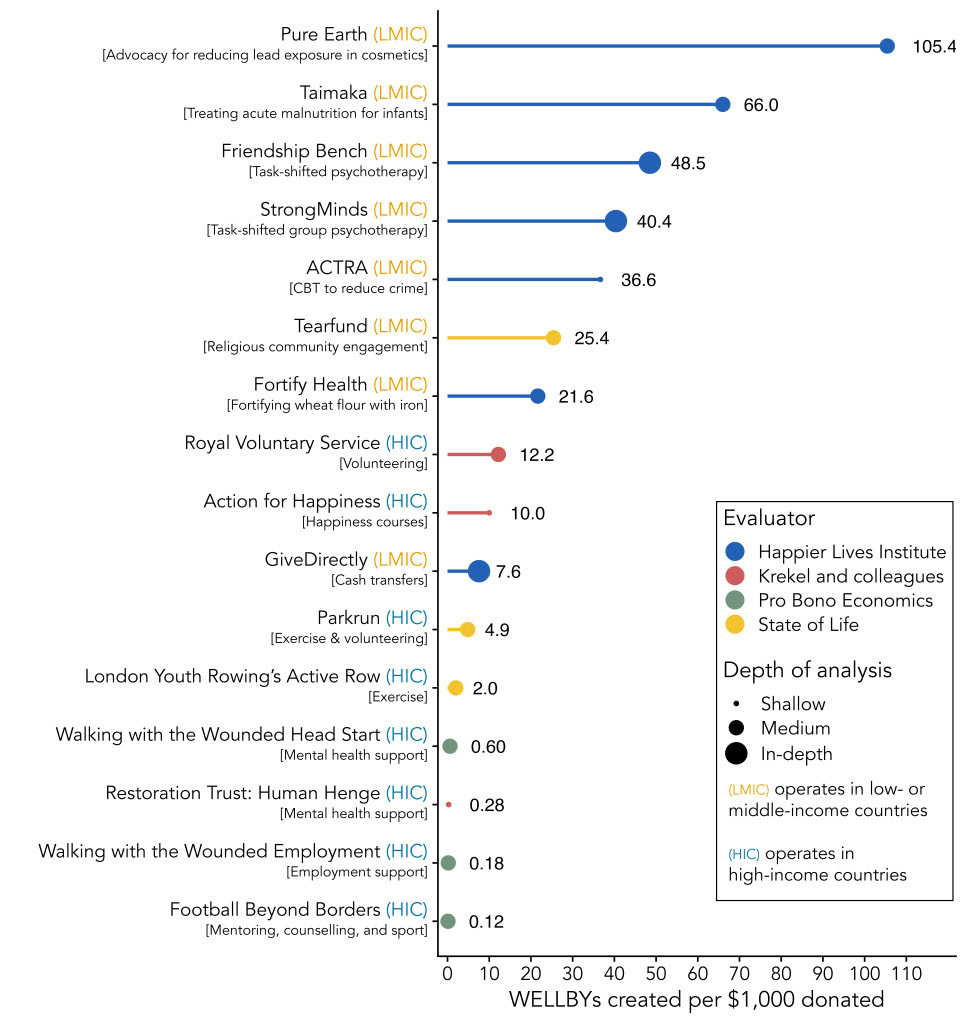
Mental, neurological, and substance-use disorders account for 12% of the global burden of disease when measured in DALYs, yet mental healthcare accounted for just 2.4% of global healthcare spending in 2016. Treatment gaps are massive, and most people with mental illness do not receive treatment. (Only 22% of people with mental illness in high-income countries, and as little as 4% of those in low-income countries, receive treatment).
Luckily, promising mental health interventions are highly cost effective in both low- and high-income countries. The Happier Lives Institute’s investigations into intervention cost effectiveness find that some mental health interventions are well over 5x more effective than GiveDirectly’s cash transfers.
However, many highly effective, evidence-backed interventions are bottlenecked by lack of prioritization, funding, and implementation.
Moral Robustness of MH Interventions
Improving mental health is ethically robust across moral systems, directly increasing wellbeing without ethical tradeoffs (e.g., no “meat-eater problem”). MH interventions target what matters most: how happy sentient beings actually feel, which may be robust both in the near-term and across many potential long-term future scenarios. There are likely also important positive externalities to improving the global mental health as a cause area; e.g. improved measures and targeting of subjective wellbeing could help us design new government success measures, better rank global priorities, or align future Artificial General Intelligence systems to robustly positive values.
At the end of the day, well-being and suffering stem from internal mental experiences. Understanding how to assess and avoid the worst subjective mental states may robustly increase our ability to reduce extreme suffering now and in the future.
Tapping Unique Funding Pools
AIM (Charity Entrepreneurship) notes that since many foundations and funders are focused on a particular geography or cause area, “even if mental health interventions turn out not to be as cost-effective as the best global health program, there is still a substantial opportunity for impact”, since these interventions may have access to donors who wouldn’t otherwise fund other cause areas (even if these other cause areas demonstrate higher marginal opportunities for impact).